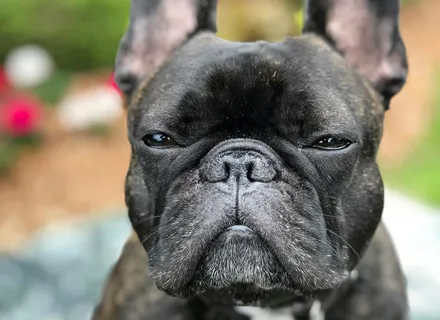
French bulldogs are now consistently the most popular dog in major Canadian cities, and that includes Burlington, Oakville, and the GTA in general. They’re affectionate, low-exercise-needing, apartment-friendly, and undeniably charming. They’re also the most heat-vulnerable popular breed in the country, and Ontario summers will kill them faster than most owners realize. This isn’t an exaggeration. Frenchie heatstroke deaths are a documented summer trend at GTA emergency vets every July. This guide is what every Frenchie owner needs to know to get through summer safely.
Why Frenchies Are So Vulnerable
The same features that make Frenchies cute make them dangerous to themselves in heat.
The brachycephalic airway
A French bulldog’s skull is significantly shorter than that of a “normal” dog, but the soft tissues inside (palate, tongue, nostrils) are not proportionally smaller. The result: airways that are compressed, narrowed, and often partially obstructed even at rest.
The clinical name is Brachycephalic Obstructive Airway Syndrome (BOAS), and it affects most flat-faced breeds (Frenchies, English bulldogs, pugs, Boston terriers) to varying degrees. The components include:
- Stenotic nares: narrow nostrils that restrict airflow
- Elongated soft palate: hanging into the airway, partially blocking the throat
- Hypoplastic trachea: undersized windpipe
- Everted laryngeal saccules: tissue around the larynx that gets pulled into the airway over time
Add it all up and you have a dog whose normal breathing is about 60-70% as efficient as a non-brachycephalic dog. When that dog needs to pant to cool down, the cooling is correspondingly impaired.
Body composition
Frenchies are compact and muscular. Their body mass per surface area is higher than that of leggier breeds, which means they hold heat efficiently, bad in summer. Their relatively thick coats don’t help, and many Frenchies carry excess weight that further insulates the body.
Inefficient cooling
Dogs lose heat primarily through panting (evaporative cooling from the respiratory tract). Frenchies, with their compromised airways, can pant but the heat exchange per breath is much lower. They also have minimal sweat glands (a few in the paw pads), so they have very few backup cooling mechanisms.
The combined effect: a Frenchie overheats roughly twice as fast as a same-weight dog of a normal breed, and cools down half as quickly once overheated.
Temperature Thresholds for Ontario Summers
This is a rough guide. Individual Frenchies vary, older, overweight, or more severely brachycephalic dogs are more sensitive. When in doubt, err cooler.
| Temperature | What’s safe |
|---|---|
| Below 20°C | Normal walks and play. Bring water. |
| 20-22°C | Short to medium walks (20-30 min). Shaded routes preferred. |
| 22-25°C | Short walks only (15-20 min). Early morning or evening. Pavement check (back of hand for 7 seconds). |
| 25-28°C | Potty breaks only. No structured exercise. Shaded routes. |
| Above 28°C | Indoor only. Quick potty trips, kept brief. Active cooling at home. |
| Above 28°C + humidity above 70% | Highest risk. Indoor only, climate control, monitor for distress. |
Important: heat is cumulative. A 30°C day at the end of a hot week is harder on the dog than a single 30°C day after a cool stretch. Multi-day heat waves require greater caution.
Humidity matters more than temperature alone. A 25°C day at 80% humidity is more dangerous than a 30°C day at 30% humidity, because panting (evaporative cooling) becomes less effective as the air’s moisture saturation rises.
Daily Routines for Frenchies in Ontario Summer
Morning routine
Walk before 8am whenever possible, earlier on heat-wave days. Get the day’s exercise done before the pavement heats up. Keep walks 15-25 minutes, focused on sniffing rather than physical exertion.
Midday
Stay indoors. Run air conditioning. Cool mats or damp towels for the dog to lie on. Skip the dog park, the conservation trail, the patio lunch, Frenchies and midday GTA summer don’t mix.
If you must take your Frenchie out (vet visit, grooming appointment), drive directly there with the car already cool, walk a minimum distance to the building, and keep the dog out of direct sun.
Evening
Walk after 7pm in summer, once temperatures have dropped 3-5°C from the daytime high. The pavement is still warm, touch test it. Many Frenchie owners use grass-only evening walks for this reason.
Indoor enrichment
Frenchies are not high-energy breeds, but they do need mental work. Summer is the time to lean on indoor enrichment:
- Snuffle mats
- Lick mats with frozen peanut butter or wet food
- Food puzzles
- Indoor scent games
- 5-10 minute training sessions
Our enrichment activities post has 15 options worth rotating.
Recognizing Heat Stress (Before It’s an Emergency)
Frenchies progress from “warm” to “dangerously overheated” much faster than other breeds. The window to act is short.
Early signs (act now)
- Panting harder than normal, with mouth wider open than usual
- Bright red gums and tongue
- Increased drooling, becoming thick or stringy
- Restlessness, pacing, distress
- Reluctance to keep moving or pulling toward shade
What to do at this stage: stop walking. Move to shade or indoors immediately. Offer cool (not ice cold) water. Wet the paws, belly, and inner thighs with cool tap water. Use a fan if available. Most dogs recover in 15-20 minutes if caught early.
Severe heatstroke (call emergency vet en route)
- Weakness, stumbling, collapse
- Vomiting or diarrhea (often bloody)
- Blue-tinged gums or tongue
- Disorientation, glassy eyes
- Seizures
- Loss of consciousness
What to do: this is a life-threatening emergency. Wet the dog with cool (not ice-cold) water, point a fan at them if possible, and get to an emergency vet. Call ahead so they’re ready. Burlington’s 24/7 emergency hospital is BVERH (775 Woodview Road, 905-637-8111). Save our Burlington pet emergency page on your phone for the full first-aid checklist and backup clinics.
Do not use ice water or ice packs, too-rapid cooling can cause shock. Wet towels and air movement do the same job more safely.
Water Safety for Frenchies
Frenchies are not built for swimming. Their compact, muscular bodies sink rather than float, and their short legs can’t drive enough propulsion to keep them above water. Combined with airway issues, struggling Frenchies inhale water quickly.
If your Frenchie is going to be around water:
- Always use a properly fitted dog life jacket for any swimming or boating
- Never leave a Frenchie unsupervised near a pool, even a fenced one
- Teach the pool exit on a leash before any swimming session
- Keep sessions short, Frenchies tire fast even with a jacket
- Rinse thoroughly afterwards to remove chlorine or pond water
Most Frenchies prefer shallow water splashing to actual swimming. A wading pool in a shaded backyard is often a better fit than an actual swim.
The blue-green algae and lake-edge issues from our Burlington summer guide apply doubly to Frenchies, they can’t fight currents or get out of trouble the way bigger dogs can.
Exercise Adjustments for Frenchies
Frenchies do not need much exercise, and trying to give them more is sometimes the problem.
How much is enough
- 30-45 minutes of total daily activity for most adult Frenchies
- This can be split into 2-3 shorter sessions
- The “session” can include a sniff walk, indoor play, or training
Exercise to avoid
- Long hikes (more than 45 minutes continuous)
- Running alongside cyclists or joggers
- Repetitive fetch sessions over 10 minutes (overheating + airway stress)
- Off-leash dog park visits in summer (overstimulation + heat + uncontrolled play)
- Any structured exercise in temperatures above 25°C
Better alternatives
- 15-minute sniff walks on quiet residential streets
- Short, structured indoor training sessions
- Cool indoor play (gentle tug, mat work)
- Air-conditioned daycare days for variety
BOAS Surgery: Worth Discussing
BOAS surgery (correcting the soft palate, nostrils, and sometimes the laryngeal saccules) can dramatically improve a Frenchie’s life. The two procedures most commonly performed:
- Soft palate resection: shortening the elongated soft palate so it doesn’t block the airway
- Stenotic nares correction: widening the nostrils
Veterinary surgeons in the GTA increasingly recommend BOAS assessment by 12-18 months of age, especially for Frenchies showing:
- Loud snoring or snorting
- Visible struggle to breathe after light activity
- Frequent gagging or vomiting after meals
- Heat intolerance beyond what other Frenchies show
- Sleep disturbance from breathing issues
It’s not cosmetic, it’s medical. A well-performed BOAS correction can add years to a Frenchie’s healthy life. If your Frenchie’s breathing seems audibly worse than other Frenchies you know, ask your vet about referral to a board-certified surgeon.
Other Summer-Specific Issues
Skin folds
The wrinkles around a Frenchie’s face trap moisture, food residue, and bacteria, worse in summer humidity. Clean the folds daily with a soft cloth and a vet-recommended cleanser. Dry thoroughly.
Allergies
Frenchies are highly allergy-prone. Summer pollen, grass, and outdoor allergens combine for itchy, irritated skin. Talk to your vet if you see paw licking, ear infections, or skin redness, modern allergy medications (Apoquel, Cytopoint) make a major difference. Our spring allergies post covers the basics.
Dental care
Frenchies have crowded teeth and tend toward dental disease. Summer’s the right time for an annual dental cleaning, your vet’s office is air-conditioned, recovery happens during the dog’s low-exercise season, and your Frenchie isn’t missing summer adventures.
Ear care
Frenchie ears collect debris and moisture. Weekly checks in summer. Clean with a vet-recommended solution as needed.
When to Use Daycare and Boarding
Summer is when professional pet care becomes especially valuable for Frenchie families:
- Daycare on hot days: a climate-controlled environment with structured low-arousal activity is the best alternative to keeping a bored Frenchie home alone all day. Look for daycares with quiet rest areas and group sizes that won’t overstimulate.
- Boarding while you travel: trust the dog to a facility that understands brachycephalic needs. Ask specifically about overnight temperature, exercise schedule, and emergency vet protocol.
- Excursions (in cooler shoulder seasons): summer is generally too hot for outdoor adventure programs for Frenchies, but spring and fall excursions can be a great fit if your dog is conditioned for it.
A well-run small-group daycare is often a better fit than a high-volume operation for Frenchies, calmer environment, more rest, easier to monitor for early heat stress.
How Pawlington Cares for Frenchies
We see plenty of Frenchies. A few things we do specifically with brachycephalic breeds in mind:
- Climate-controlled facility kept on the cool side year-round
- Built-in rest periods on every daycare day (no continuous play marathons)
- Staff trained to recognize early heat stress signals
- Quiet rest spots for dogs who need a break from group play
- Outdoor time on cooler days, indoor enrichment on hotter ones
- Honest screening, if a Frenchie isn’t a good fit for group daycare, we’ll tell you and suggest alternatives like one-on-one excursions in cooler seasons
If you have a Frenchie and you’re worried about summer, come for an assessment. We’ll be honest about what we can and can’t safely do with your specific dog.
French bulldogs are wonderful companions and a genuine summer-safety challenge. The owners who get this right are the ones who adjust the routine to the breed, earlier walks, cooler routes, more indoor enrichment, faster reactions to early heat signs. The owners who try to make the breed adjust to the routine are the ones who end up at the emergency vet. Plan ahead, watch your dog, and ask for help when you need it. Reach out to our team and we’ll help you build a Frenchie-safe summer.