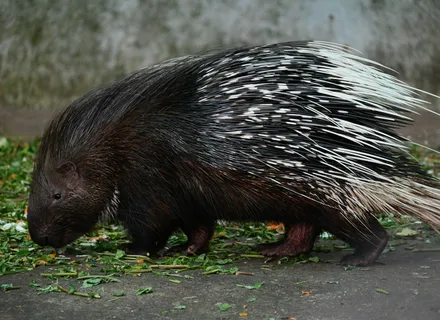
A dog with porcupine quills almost always needs a vet trip, not home removal. Porcupine quills have microscopic backward-facing barbs that grip flesh and migrate deeper with every movement. Attempting to pull at home usually breaks the quill, leaves the barbed shaft embedded where it continues to travel inward, and turns a manageable vet visit into a much harder problem days or weeks later. If your dog has had a porcupine encounter, call your regular vet for same-day removal, or drive to Burlington Veterinary Emergency Hospital (BVERH) at (905) 637-8111 if quills are in the mouth or throat, if breathing is affected, or if the count is very high. This guide explains why quill removal is a vet job, what to do right after the encounter, and what to expect at the clinic.
What to Do in the First 10 Minutes
- Keep your dog calm and still. Every movement drives quills deeper. Carry small dogs. Leash large dogs short. Avoid stairs and running.
- Do not pull quills at home except in narrow circumstances (see below). The default is: leave them all in place for the vet.
- Check the mouth and throat carefully. Quills in the airway or mouth are an emergency. If your dog has difficulty breathing or cannot close their mouth, drive to BVERH at (905) 637-8111 immediately.
- Do not let your dog rub the affected area on the ground or with paws. Rubbing breaks quills and drives shafts inward.
- Call your regular vet for a same-day appointment if symptoms are mild (a few quills in the face, dog is breathing normally, not in extreme distress).
- Drive directly to BVERH at 775 Woodview Road if quills are in the mouth or throat, breathing is affected, the count is in the hundreds, or your regular vet cannot see you within a few hours.
- Do not give human pain medication. Ibuprofen and acetaminophen are toxic to dogs. See our ibuprofen and Tylenol guide.
The full Burlington emergency contact list is on our pet emergency page.
Why Quills Are Different from Splinters
Porcupine quills have microscopic backward-facing barbs along the shaft. The barbs catch on tissue fibres and prevent the quill from sliding out. Worse, normal muscle movement actually pulls quills deeper into the body rather than ejecting them. Documented quill migration distances include:
- Several centimetres through soft tissue in 24 hours
- Through the chest wall into the lung over days to weeks
- Into the eye socket and brain in rare severe cases
- Around the heart and great vessels
Once a quill breaks during pulling, the barbed shaft is invisible on standard X-rays (quills are radiolucent) and very difficult to find in tissue. The fragment continues to migrate inward.
This is why the standard veterinary advice is: do not pull, drive to the vet, and the sooner the better. Time matters because:
- Quills migrate deeper with every hour
- Inflammation builds around quills and obscures them in tissue
- The dog’s tolerance for handling drops as pain worsens
- Quills in the face can swell shut eyes, mouth, and breathing passages
The One Narrow Exception
The single situation where home removal is reasonable: one or two quills in obvious locations on a very calm dog, with pliers and a clear view. Even then, vet follow-up is recommended because broken-off fragments are common.
If you choose to remove a quill at home:
- Use pliers, not your fingers (you cannot get firm enough grip on smooth quills).
- Grip as close to the skin as possible.
- Pull straight out with steady firm pressure, do not twist or jerk.
- If the quill breaks, stop and call your vet.
- Clean the puncture site with mild soap and water.
- Watch the area for the next 14 days for swelling, redness, or new bumps, all signs of a retained fragment.
If you are removing more than 2 or 3 quills, or any quills near the eyes, mouth, throat, or chest, stop and drive to the vet.
When This Is a True Emergency
Drive to BVERH at (905) 637-8111 immediately if:
- Quills are in the mouth, throat, or tongue
- Quills are near or in the eyes
- Quills are in the chest area, especially if breathing is rapid or laboured
- The dog cannot close their mouth, eat, or drink
- The dog is in extreme distress, collapsed, or unable to walk
- There are hundreds of quills (often the case with a face-first encounter)
- You see active bleeding from a quill site
For mild cases (a few quills in the face or front legs, dog is breathing normally and walking), a same-day appointment with your regular vet is usually appropriate.
What the Vet Will Do
Standard porcupine quill removal protocol:
- Sedation or anesthesia. Even a few quills cause enough pain that awake removal is not realistic. The level of sedation depends on quill count and the dog’s temperament.
- Systematic search. The vet checks every part of the body, including inside the mouth, between the toes, inside the ears, and along the chest. Hidden quills are common.
- Removal with hemostats or pliers. Each quill is gripped at the base and pulled straight out.
- Documentation of broken or unaccounted-for quills. Sometimes the vet can locate broken shafts under the skin and remove them; sometimes they have to be left and watched.
- Antibiotics prescribed for 7 to 14 days because quill punctures carry bacteria from the porcupine and from the dog’s mouth.
- Pain medication for several days.
- Discharge instructions to watch for new bumps, abscesses, or signs of pain over the next 4 to 6 weeks. A retained quill fragment can present as a mystery lump or abscess.
Cost: removal under sedation typically runs $400 to $1,200 depending on quill count and length of procedure. Hundreds of quills, or quills requiring surgery to retrieve from deep tissue, can cost more. After-hours emergency rates at BVERH are higher than business-hours rates at a general practice.
Why Burlington Dogs Get Quilled
Halton has a healthy porcupine population in:
- Conservation areas: Mountsberg, Crawford Lake, Mount Nemo, Hilton Falls
- Bronte Creek Provincial Park
- Bruce Trail wooded sections
- Rural Halton woodlots and brush areas
Porcupines are active at dusk and overnight, sheltering in hollow trees, rock crevices, and brush piles during the day. They do not flush like other wildlife: when threatened, they freeze and present their quill-covered back, which is exactly the wrong response for a curious dog.
The classic encounter is an off-leash dog running ahead on a forest trail at dawn or dusk, especially in the fall. Some dogs learn after one encounter and avoid porcupines for life. Others (especially prey-driven breeds like terriers, retrievers, and sighthounds) keep getting quilled repeatedly because the prey drive overrides the pain memory.
Prevention
- Leash dogs in wooded areas at dawn, dusk, and overnight, especially in fall.
- Train a strong “leave it” cue before any off-leash trail use.
- Avoid known porcupine habitat at peak activity times.
- Use a bear bell or other noise to alert wildlife before your dog encounters them.
- Check brush piles and woodpiles in rural yards before letting dogs out at night.
- For repeatedly-quilled dogs, accept that off-leash forest walks may not be safe for that dog. Some prey-driven dogs will never learn to avoid porcupines.
The complete Burlington emergency resource list is on our pet emergency page. For related wildlife encounters, see our guides on skunk spray and backyard summer hazards.
Porcupine quills are one of those emergencies where the temptation to handle it at home leads directly to a worse outcome at the vet. Keep your dog calm, do not pull, drive to a vet, and accept that sedated removal is the right answer. The dogs who do best are the ones whose owners resisted the urge to fix it themselves.