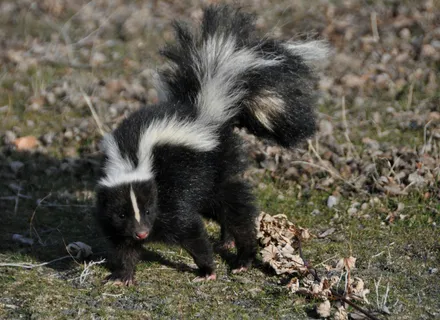
A skunk-sprayed dog is not usually a medical emergency, but it is a household emergency that needs the right intervention fast. The good news: there is a proven formula that actually neutralizes the spray, not just masks it. The bad news: tomato juice does not work, despite generations of internet advice claiming it does. This guide walks through the actual chemistry, what to do for spray in the eyes or mouth, when a skunk encounter is a vet visit, and how to keep your Burlington dog out of the next encounter. If your dog has visible bite wounds, ingested significant spray, or is showing concerning symptoms (weakness, pale gums, dark urine), call Burlington Veterinary Emergency Hospital (BVERH) at (905) 637-8111.
What to Do in the First 10 Minutes
- Keep the dog outside. Do not let them in the house. The oils in skunk spray transfer to carpets, upholstery, and walls.
- Check the eyes first. Rinse with cool clean water or sterile saline for 10 to 15 minutes if the dog took spray to the face. Do not apply the cleaning formula near the eyes.
- Check for bites. Skunks defend with their spray but also bite when cornered. Look carefully through wet fur for small puncture wounds, especially on the face, neck, and front legs.
- Mix the Krebaum formula immediately: 1 litre (1 quart) of fresh 3% hydrogen peroxide, 1/4 cup baking soda, 1 to 2 teaspoons of liquid dish soap (Dawn or equivalent).
- Apply to wet fur and lather thoroughly, avoiding the eyes. Leave on for 5 minutes.
- Rinse thoroughly with clean water. Repeat the application if the smell persists, but avoid more than two applications in one bath (hydrogen peroxide can bleach dark fur and irritate skin with repeated exposure).
- Follow with a regular dog shampoo bath.
- Use the mixed formula within an hour. Do not store it in a sealed container, it produces oxygen and can rupture the container.
The full Burlington emergency contact list is on our pet emergency page.
The Chemistry of Why Tomato Juice Does Not Work
Skunk spray contains volatile sulphur compounds called thiols. Tomato juice does not chemically neutralize thiols, it just masks the smell temporarily by overwhelming your nose with a different strong odour. Once your nose habituates to the tomato smell (about 10 minutes), the skunk smell becomes obvious again.
The Krebaum formula works through an actual oxidation reaction: hydrogen peroxide and baking soda chemically convert the smelly thiols into odourless compounds. This is real deodorization, not masking.
Why this exact formula
- 3% hydrogen peroxide: the oxidizer. Higher concentrations bleach fur and irritate skin; lower concentrations do not work as well. The brown bottle from the drugstore is exactly the right strength.
- Baking soda: raises the pH so the hydrogen peroxide reacts efficiently with the thiols.
- Dish soap: breaks up the oily carrier in the spray so the chemistry can reach the thiols. Dawn is the most-tested brand but any grease-cutting dish soap works.
Do not substitute hair conditioner, regular shampoo, or essential oils for any of these ingredients. The formula works because of specific chemistry; off-label substitutes do not.
Storage warning
Once mixed, the formula produces oxygen gas. A sealed container will pressurize and can rupture. Mix it in an open bucket, apply immediately, and discard any leftover down the drain.
Spray in the Eyes, Mouth, and Nose
Eyes:
- Burning, redness, tearing, squinting, and rubbing are normal reactions.
- Rinse with cool clean water or sterile saline for 10 to 15 minutes. Use a gentle stream, not pressure.
- Do not apply the cleaning formula near the eyes.
- If significant redness, squinting, or discharge persists after rinsing, call BVERH at (905) 637-8111 or your regular vet. Corneal ulcers from concentrated spray are rare but possible.
Mouth:
- Drooling, foaming, and vomiting are common. The taste is intensely irritating.
- Rinse the muzzle with cool water. Allow the dog to drink small amounts of cool water.
- Avoid the cleaning formula in the mouth.
- Most dogs recover within an hour. Persistent vomiting or refusal to drink warrants a vet check.
Nose:
- Sneezing, snorting, and watery discharge are normal. Most resolve within an hour.
When a Skunk Encounter Is a Vet Visit
Most skunk sprays are an annoyance, not an emergency. The encounter becomes a vet visit when:
- There are bite wounds. Skunks are rabies vector species in Ontario. Any bite requires vet evaluation and a rabies booster (even for vaccinated dogs, since boosters are recommended after potential rabies exposure).
- Significant spray was ingested. Dogs that take spray directly in the face and swallow can develop Heinz body anemia within 1 to 5 days. Symptoms include weakness, pale or yellow gums, dark urine, lethargy, rapid breathing, and decreased appetite.
- Eye irritation persists after thorough rinsing.
- The dog seems unwell in the days following the encounter, even without obvious injury.
- You are not certain whether a skunk actually sprayed, or whether the encounter was a fight where bites occurred but you cannot find them in wet fur.
Call BVERH at (905) 637-8111 for any of these. Rabies-related concerns should also be reported to Halton Region Public Health.
Why Burlington Has So Many Skunks
Burlington has a robust striped skunk population, particularly in:
- Suburban backyards with brush piles, deck undersides, or open compost
- Mature neighbourhoods with hedges and gardens
- Park edges and conservation areas
- Areas with accessible garbage, pet food left outdoors, or bird feeders
Skunks are crepuscular and nocturnal: most active from about an hour before sunset until an hour after sunrise. Peak activity months in Halton are May through October, with mating season in February to March bringing extra movement.
Reducing yard attractiveness
- Secure garbage in tight-lidded bins until pickup morning.
- Bring in pet food bowls overnight.
- Remove brush piles and seal under-deck spaces.
- Use motion-activated lighting and sprinklers.
- Clean up fallen birdseed.
- Remove fallen fruit from trees.
Avoiding encounters on walks
- Use a leash from dusk to dawn during skunk season (May through October).
- Avoid letting dogs investigate dense brush, deck undersides, or shrubs after dark.
- Carry a small flashlight on evening walks to scan ahead.
- Train a strong “leave it” cue.
- If you see a skunk, back away slowly and quietly. Skunks rarely spray when given an exit.
Skunk warning signs (before the spray)
Skunks usually warn before spraying. They stomp their front feet, hiss, raise their tail, and arch their back. A dog given a chance to back off after a warning often avoids the spray entirely. Dogs that charge through warnings get sprayed at point-blank range.
What to Do With Sprayed Equipment
Skunk smell transfers to leashes, collars, harnesses, dog beds, car upholstery, and clothing. The Krebaum formula works on most fabrics:
- Soak washable items in the formula for 15 to 30 minutes, then launder.
- Wipe down hard surfaces (car interiors, walls) with the formula on a cloth, then rinse with clean water.
- For carpets and upholstery, a commercial enzymatic cleaner works better than the home formula.
- Test for colourfastness in an inconspicuous spot before treating dark fabrics, hydrogen peroxide can bleach.
The complete Burlington emergency resource list is on our pet emergency page. For other wildlife encounters, see our backyard hazards guide and porcupine quill guide.
A skunked dog is one of the few emergencies that calls for chemistry, not a vet, in most cases. Keep a bottle of 3% hydrogen peroxide and a box of baking soda in the cleaning cupboard during skunk season and you will be ready when it happens. The vet visit becomes important only when bites are involved, eyes are affected, or the dog seems unwell in the following days.