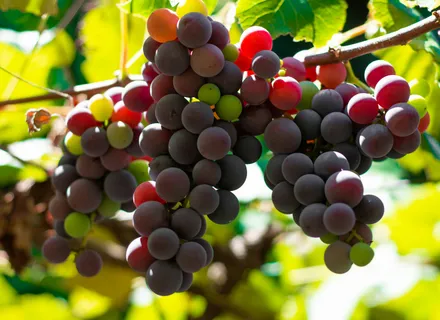
If your dog has eaten grapes, raisins, or any grape-containing food, treat it as a potential emergency and call Burlington Veterinary Emergency Hospital (BVERH) at (905) 637-8111 or the Pet Poison Helpline at 1-855-764-7661 immediately. The toxic dose is unpredictable, some dogs develop acute kidney failure from a single grape while others tolerate larger amounts, and there is no way to know in advance how your individual dog will react. Early decontamination (within the first one to two hours) is the most reliable way to prevent kidney damage. This guide walks through exactly what to do, why dose is so unpredictable, and what to expect at the vet.
What to Do in the First 10 Minutes
- Identify what was eaten. Fresh grapes, raisins, sultanas, currants, oatmeal raisin cookies, trail mix, grape jelly, grape juice, wine grapes from the garden. Note the form, because raisins are roughly five times more concentrated than grapes by weight.
- Estimate the amount. Count remaining grapes, weigh the bag, take a photo. The Pet Poison Helpline can calculate exposure based on weight.
- Note your dog’s weight and the time of ingestion.
- Call BVERH (905-637-8111) or the Pet Poison Helpline (1-855-764-7661) immediately. Both are 24/7. Do not wait for symptoms.
- Do not induce vomiting at home unless instructed. Hydrogen peroxide can cause its own complications.
- Drive to BVERH at 775 Woodview Road, Burlington if you cannot reach a vet within five minutes.
The full Burlington 24/7 emergency contact list and first-aid steps for related toxins are on our pet emergency page. Save it on your phone now.
Why the Toxic Dose Is Unpredictable
For decades, veterinarians knew that grapes and raisins could cause acute kidney failure in dogs but did not know which compound was responsible. Recent research has identified tartaric acid and potassium bitartrate as the likely culprits, which explains why other tartaric-acid-containing foods (cream of tartar, tamarind) cause similar kidney damage in dogs.
The unpredictable part is the wide variation in tartaric acid sensitivity between individual dogs. Some dogs metabolize it without obvious effect. Others develop life-threatening kidney damage from a handful of grapes or even a single grape. There is no test to identify which dogs are sensitive in advance, and no reliable “safe” dose has ever been established.
Practical translation: every grape or raisin ingestion gets treated as if your dog is the sensitive type. The cost of overreacting (a vet visit and induced vomiting) is small. The cost of underreacting (kidney failure, dialysis, possible death) is enormous.
Relative toxicity
| Form | Tartaric acid concentration | Risk per gram |
|---|---|---|
| Fresh grapes | Moderate | Baseline |
| Raisins | High (dehydrated) | ~5x grapes |
| Sultanas, currants | High | ~5x grapes |
| Grape juice | Low to moderate | Varies by concentration |
| Wine grapes (Concord, etc.) | Highest | Highest |
A 20-pound dog eating six raisins from a dropped trail mix bag is roughly equivalent to eating 30 grapes. This is why trail mix, oatmeal raisin cookies, and granola bars are some of the most common accidental ingestion sources.
Symptoms and Timeline
6 to 24 hours after ingestion:
- Vomiting (often the first sign, sometimes containing visible grape pieces)
- Diarrhea
- Loss of appetite
- Lethargy
- Abdominal tenderness
24 to 72 hours after ingestion (kidney damage phase):
- Increased thirst and urination
- Followed by decreased or absent urination
- Severe weakness
- Foul, ammonia-like breath
- Tremors or seizures in severe cases
- Collapse
Once kidney failure symptoms appear, the damage is usually advanced. Some dogs recover with aggressive IV fluid therapy and supportive care. Others progress to oliguric (low urine output) or anuric (no urine output) renal failure, which requires dialysis (rarely available in veterinary medicine) and has a high mortality rate.
This is why veterinarians push for treatment in the first one to two hours even when the dog appears completely fine. Decontamination prevents kidney damage; supportive care after damage occurs is much less effective.
What the Vet Will Do
Standard emergency protocol for grape or raisin ingestion at BVERH or any 24/7 clinic:
- Decontamination within two hours: induced vomiting with apomorphine, followed by one to two doses of activated charcoal to bind any remaining toxin.
- Baseline blood work: kidney values (BUN, creatinine, SDMA), electrolytes, urinalysis.
- Aggressive IV fluid therapy: typically 1.5 to 2 times maintenance fluid rate for 48 to 72 hours to flush the kidneys.
- Repeat kidney values at 24, 48, and 72 hours to detect rising creatinine, a sign of developing kidney damage.
- Hospitalization for 48 to 72 hours of monitoring is standard for any meaningful exposure.
- If kidney values rise: additional fluid therapy, antiemetics, gastroprotectants, possible referral for hemodialysis (limited availability in Ontario, typically at the Ontario Veterinary College in Guelph).
Cost: a mild case treated within an hour at BVERH typically runs $800 to $1,500. A case that develops kidney injury and requires 3 to 5 days of hospitalization can exceed $3,000 to $6,000. Dialysis referral adds substantially more.
Prevention
- Treat grapes and raisins like any other dog toxin. No “small amount is fine” rules.
- Audit your kitchen for raisin-containing baked goods, oatmeal raisin cookies, granola bars, trail mix, raisin bread, hot cross buns, fruitcake.
- Keep wine grapes off the ground in the garden. Burlington has a meaningful number of backyard grape vines, and fallen grapes are a real ingestion source in late summer.
- Tell house guests, dog walkers, and kids not to share fruit with the dog. Grapes are a common “harmless snack” people don’t realize is dangerous.
- Watch trail mix at picnics. Drop a single bag at a park and your dog finds it before you do.
- Save BVERH (905-637-8111) and the Pet Poison Helpline (1-855-764-7661) in your phone now.
The complete Burlington emergency resource list is on our pet emergency page. Other common ingestion emergencies are covered in our guides on chocolate and xylitol.
Grape and raisin toxicity is one of the harder pet emergencies to feel calm about, because there is no way to know in advance whether your dog is the sensitive type. The good news is that early treatment (in the first one to two hours) is highly effective at preventing kidney damage. The single most important action you can take right now is to call (905) 637-8111. Do not wait to see if your dog gets sick.