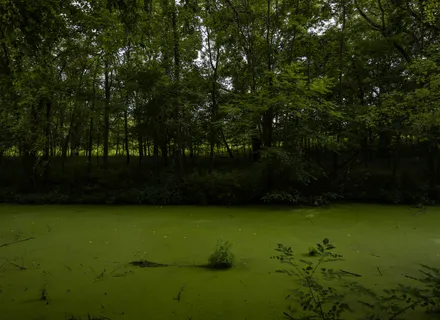
Blue-green algae (cyanobacteria) blooms in Lake Ontario, Burlington beaches, and Halton conservation areas can kill a dog within hours of exposure. The toxins produced by these blooms have no antidote, treatment is supportive only, and even brief contact can be fatal. If your dog has been in or near suspicious water (bright green, turquoise, or blue surface scum, or water that smells musty or septic), rinse them with clean fresh water immediately, prevent self-grooming, and drive to Burlington Veterinary Emergency Hospital (BVERH) at (905) 637-8111. Do not wait for symptoms. This guide tells you how to recognize a bloom, what to do in the first 15 minutes, and where Halton tracks current advisories.
What to Do in the First 10 Minutes
- Get the dog out of the water immediately. Carry them if you can to minimize self-grooming and water dripping into the mouth.
- Rinse thoroughly with clean fresh water. Bottled water, a hose, a beach shower, or any drinking-quality source. Focus on the muzzle, mouth area, paws, belly, and any fur that contacted the water. Avoid getting rinse water in the eyes.
- Do not let your dog lick themselves while wet. Toxins concentrate in wet fur. If they will tolerate it, wrap them in a towel and keep their mouth occupied.
- Call BVERH at (905) 637-8111 immediately. Even if no symptoms are present. The vet team will start preparing supportive treatment in advance.
- Note the location, time, and a photo of the water if safe to take one. This information helps both your dog’s treatment and the Halton Region public health response.
- Drive to BVERH at 775 Woodview Road in Burlington. Time matters. Asymptomatic dogs are still observed and treated proactively because symptoms can appear suddenly.
- Do not induce vomiting at home unless a vet directs you to.
The full Burlington 24/7 emergency contact list and first-aid steps for other water and outdoor emergencies are on our pet emergency page.
What Blue-Green Algae Looks Like
The name is misleading. Cyanobacteria blooms can appear blue, green, turquoise, brown, red, or even white, and can look like:
- Pea soup or spilled paint on the water surface
- A thick floating mat of grass clippings or sludge
- Foam concentrated along shorelines, especially on the downwind side
- Streaks or swirls of bright colour on the water
- A slimy film on rocks at the water’s edge
Other tell-tale signs:
- A musty, septic, or rotting smell
- Concentrated colour in calm, sheltered bays and inlets while open water looks clear
- Visible dead fish or waterfowl in the area
Algae blooms are not always visible. Toxins can persist in water that looks clear after a bloom dies off. The rule for any dog owner during bloom season is: when in doubt, keep the dog out.
What it is not
Normal water plants, duckweed (small floating green leaves with roots), and harmless filamentous algae attached to rocks are not the same as cyanobacteria blooms. If you are not sure, treat it as suspicious and use a different water source.
Where and When in Burlington
Cyanobacteria thrive in warm, calm, nutrient-rich water. Burlington and Halton have several known seasonal hot spots:
Lake Ontario shoreline:
- La Salle Park beach (recurring advisories in past summers)
- Burlington Beach Waterfront
- Lakeshore Road areas with limited water circulation
Conservation areas:
- Bronte Creek Provincial Park ponds
- Mount Nemo Conservation Area water features
- Crawford Lake (rare but documented blooms in some years)
Agricultural and rural:
- Drainage ditches in north Burlington and rural Halton
- Stagnant farm ponds
- Backyard ornamental ponds in warm spells
Peak season: July through early October. Late summer heat plus low water movement is prime conditions.
Halton Region Public Health maintains current beach and water advisories. Check halton.ca under public health and beach water quality before any waterside trip during bloom season. The same warning applies to Conservation Halton sites and Ontario Parks beaches.
Why It Is So Dangerous
Cyanobacteria can produce several toxin families. The two most relevant for dogs in Ontario:
Anatoxins (the fast killers): affect the nervous system. Symptoms begin within minutes to an hour of exposure. The dog may develop muscle tremors, weakness, paralysis, difficulty breathing, seizures, and respiratory arrest. Death can occur within 30 to 60 minutes of exposure to a heavily concentrated dose. There is no antidote.
Microcystins (the slow killers): attack the liver. Symptoms appear within a few hours: vomiting, diarrhea (sometimes bloody), weakness, lack of appetite, yellow gums (jaundice), abdominal pain, and dark or tarry stools. Liver damage continues to progress over 24 to 72 hours. Treatment is supportive (IV fluids, anti-nausea, liver protectants), and survival depends on the dose received and how quickly treatment is started.
The combination of “fast onset for some toxins” and “no antidote for any of them” is why blue-green algae is one of the most-feared summer emergencies in veterinary medicine.
Symptoms After Exposure
Within minutes to an hour (anatoxin):
- Muscle tremors
- Twitching
- Weakness, wobbliness
- Excessive drooling
- Vomiting
- Difficulty breathing
- Seizures
- Collapse
Within a few hours (microcystin):
- Vomiting (sometimes with blood)
- Diarrhea (often dark or bloody)
- Lethargy
- Lack of appetite
- Pale or yellow gums
- Abdominal pain
- Dark urine
- Progressive weakness
Within 24 to 72 hours (liver failure):
- Jaundice
- Continued vomiting
- Internal bleeding
- Collapse
- Coma
Any symptom after suspected exposure is an emergency. Asymptomatic dogs with confirmed exposure are still treated proactively because symptoms can appear suddenly hours after contact.
What the Vet Will Do
There is no specific antidote. Treatment is aggressive supportive care:
- Decontamination: thorough bathing to remove residual toxin from skin and fur, activated charcoal if recent ingestion.
- IV fluids to support blood pressure, kidney function, and toxin clearance.
- Anti-nausea and anti-seizure medication as needed.
- Oxygen support and ventilation for respiratory failure.
- Liver protectants (SAMe, silymarin, NAC) for microcystin exposure.
- Bloodwork at 24 and 72 hours to monitor liver enzymes and clotting function.
- Hospitalization typically 48 to 72 hours, longer for severe cases.
Cost varies widely based on toxin type and severity. Mild exposures often run $1,500 to $3,000. Severe cases requiring ICU and ventilation can exceed $10,000. Survival rates depend heavily on speed of treatment and the specific toxin dose.
Prevention
- Check Halton Region beach advisories before any visit to Lake Ontario, conservation ponds, or beaches during bloom season.
- Avoid stagnant water in late summer, even small puddles or backyard ponds in hot weather.
- Carry fresh water on hikes and beach trips. Dehydrated dogs drink whatever they find.
- Rinse your dog after any swim, even in water that looks clean.
- Watch shoreline vegetation. Dogs that eat grass at the water’s edge can ingest concentrated algae stuck to the plants.
- Avoid blue-green or turquoise scum even on what looks like clean water. Toxins can persist after the bloom is no longer visible.
- Report visible blooms to Halton Region Public Health and Conservation Halton so they can issue advisories.
The complete Burlington emergency resource list and first-aid steps for related summer dangers are on our pet emergency page. For more on summer safety, see our summer heat and hydration guide and backyard hazards guide.
Blue-green algae is the rare emergency where prevention matters more than first aid, because the first aid options are limited. If you have a water-loving dog in Burlington, the routine to build during summer is: check the advisory, scout the water, rinse after every swim, carry fresh water. The minutes you spend on prevention in July beat the hours at BVERH in August.