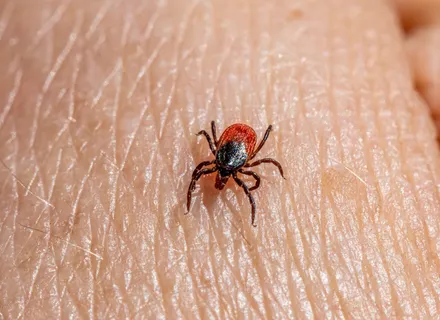
Tick exposure in Burlington and Halton has been increasing year over year, and Lyme disease is now considered endemic across most of southern Ontario. The good news: prompt removal of an attached tick (within 24 hours) dramatically reduces the risk of disease transmission, and modern veterinary preventatives are highly effective. The bad news: ticks are small, easily missed, and most dogs that develop Lyme disease never show obvious symptoms until later complications develop. This guide covers safe tick removal, which Halton trails are highest-risk, when to test and treat, and how to build a prevention routine that actually works.
What to Do When You Find a Tick
- Get fine-tipped tweezers or a tick removal tool. A tick key or O’Tom Tick Twister works well. Standard household tweezers with broad blunt tips are not ideal but workable.
- Grasp the tick as close to the skin as possible without pinching the skin itself.
- Pull straight up with steady even pressure. Do not twist, jerk, or squeeze the body.
- Do not use folk methods. Matches, lighters, alcohol, petroleum jelly, nail polish, and essential oils are ineffective and can cause the tick to regurgitate infectious material into the bite.
- Clean the bite site with mild soap and water or a chlorhexidine wipe.
- Save the tick in a sealed container. A small sandwich bag or pill bottle works. The tick can be identified by your vet or sent for testing if needed.
- Mark the date on your calendar and watch the bite site for the next 30 days. A small bump is normal. Spreading redness, a bullseye pattern, or signs of infection warrant a vet visit.
- Schedule a Lyme test for 6 to 8 weeks out if the tick was attached for more than 24 hours or was identified as a blacklegged tick.
If you cannot get the tick fully removed (mouthparts left in skin), do not dig with a needle. Clean the site and let the body extrude the fragment naturally over a few days. If swelling, redness, or discharge develops, see your vet.
The full Burlington emergency contact list and other outdoor safety resources are on our pet emergency page.
Where Ticks Live in Halton
Blacklegged tick populations have expanded steadily in southern Ontario over the past decade. In Halton, the highest-risk locations are:
Bruce Trail sections:
- Mount Nemo Conservation Area
- Rattlesnake Point
- Crawford Lake
- Burlington-to-Hamilton section
- Iroquois Shoreline Woods
Conservation areas:
- Bronte Creek Provincial Park (especially edge trails and tall grass areas)
- Crawford Lake Conservation Area
- Mountsberg Conservation Area
- Hilton Falls Conservation Area
Other tick-friendly habitat:
- Any tall grass or brush along walking trails
- Wooded areas with leaf litter
- Edges where lawn meets forest
- Long-grass meadows
- Backyards adjacent to woodlots
Ticks live in leaf litter and tall vegetation. They climb to the tip of grass blades and wait for a host to brush past. The peak activity windows are spring (April to June) and fall (September to November), but adult ticks can be active on any day above 4 degrees Celsius, including warm winter days.
What blacklegged ticks look like
- Unfed adult female: about the size of a sesame seed, dark brown to black with reddish back
- Unfed adult male: smaller, all-dark brown
- Engorged female (after feeding): the size of a small grape, grey or tan
- Nymph (the most likely to bite humans): pinhead-sized, often missed
- American dog ticks (more common but not the Lyme vector): larger, brown with white markings, also bite dogs
If you are not sure what kind of tick you found, your vet or pharmacist can usually identify it from a photo or the saved specimen.
Daily Tick Check Technique
After any walk in tick habitat:
- Run your hands slowly over the entire dog, paying attention to areas with thin fur and warm skin: ears (inside and behind), eyelids, under the collar, armpits, groin, between toes, around the tail base.
- Look for small bumps. Ticks attach close to the skin and can feel like a small wart or skin tag.
- Check yourself and any humans on the walk. The same trails have the same ticks for humans, and humans get Lyme too.
- Brush long-coated dogs thoroughly. Ticks can wander for hours before attaching, and a thorough brushing dislodges them.
A daily check during tick season takes 2 minutes and is the single most effective thing you can do to prevent disease transmission.
Symptoms of Lyme Disease
Most dogs exposed to Lyme bacteria never show symptoms. Of dogs that do develop clinical signs, the timeline is typically:
2 to 5 months after exposure:
- Intermittent shifting lameness (one leg today, a different leg next week)
- Low-grade fever
- Lethargy and decreased activity
- Loss of appetite
- Swollen joints or lymph nodes
- General discomfort
Lyme nephritis (a less common but serious complication):
- Increased thirst and urination
- Weight loss
- Vomiting
- Lethargy
- Protein in the urine (detected on routine blood/urine work)
- Can progress to kidney failure
Lyme nephritis is more common in Labradors, Golden Retrievers, and Bernese Mountain Dogs. Annual screening with a 4Dx test plus a urine protein check catches it early when treatment is most effective.
Testing and Treatment
Standard screening: The 4Dx Plus / SNAP test is an in-clinic blood test that screens for heartworm, Lyme, anaplasmosis, and ehrlichiosis. Recommended annually for any dog with outdoor exposure. Results in 10 minutes.
After a known bite: Wait 6 to 8 weeks before testing for antibodies. Testing too early returns false negatives.
If positive: Treatment is a 4-week course of doxycycline. Most dogs improve within 48 hours of starting treatment. Follow-up blood work and urine protein testing assess for ongoing infection or Lyme nephritis.
Prophylactic treatment after a confirmed blacklegged tick bite: Some vets prescribe a short course of doxycycline immediately, especially if the tick was engorged or attachment time exceeded 24 hours. This is a vet decision based on the specific exposure.
Prevention
Monthly oral preventatives (most effective):
- Nexgard (afoxolaner): monthly chewable
- Bravecto (fluralaner): every 12 weeks chewable
- Simparica Trio: combines tick/flea/heartworm protection
- Credelio: monthly chewable
All four kill ticks within 4 to 12 hours of attachment, before disease transmission for Lyme. Available by prescription from your vet.
Topical preventatives (moderate effectiveness):
- Frontline Plus, Advantix: monthly topical applications
- Less effective against blacklegged ticks than orals
- Useful as an additional layer for high-exposure dogs
Lyme vaccine:
- Recommended for dogs with high tick exposure or who live in endemic areas
- Initial two-dose series, then annual booster
- Adds protection but does not replace tick preventatives
Environmental management:
- Keep grass short in your yard
- Create a barrier of mulch or gravel between lawn and any wooded edge
- Discourage wildlife (deer, mice) that carry ticks
- Apply yard tick treatments if exposure is heavy
What Lyme Looks Like Compared to Other Causes
Intermittent lameness in dogs has many causes: soft tissue strains, joint disease, panosteitis in young large breeds, and immune-mediated polyarthritis. Lyme is one possibility among many, and the way to distinguish them is the 4Dx test plus joint fluid analysis when indicated. Do not assume sudden lameness is Lyme; do test for it as part of the workup.
A dog that develops lameness with a recent tick exposure history should be seen by their regular vet for assessment. Acute severe symptoms (collapse, sudden inability to walk, fever, neurological signs) warrant an emergency visit to BVERH at (905) 637-8111.
The complete Burlington emergency resource list is on our pet emergency page. For broader spring/summer outdoor safety, see our summer pet prep guide and dog-friendly Burlington summer guide.
Ticks are now part of life in Halton. The dogs who avoid Lyme are the ones whose owners have built a simple routine: monthly preventative, daily tick check after walks in tick habitat, annual 4Dx screening, and prompt removal of any attached tick. Build the routine in April, run it through November, and you will protect your dog through the highest-risk months without much effort.