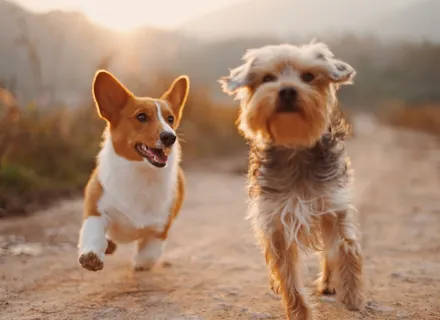
The fastest way to stop your dog from pulling on the leash is to make loose leash walking more rewarding than pulling. This means consistently rewarding your dog for staying near your side and never allowing pulling to lead to forward progress. When the leash tightens, stop moving or change direction; when the leash is loose, mark the behavior and deliver treats or allow sniffing as a reward. Most dogs pull because it has always worked. Every step forward on a tight leash reinforces the habit. Reversing this pattern requires patience, but the behavioral science is clear: dogs repeat behaviors that lead to good outcomes. By making “leash tension equals stop” and “loose leash equals go,” you create a new equation that every dog can learn, regardless of age, breed, or size.
Why Do Dogs Pull on the Leash in the First Place?
Dogs pull because forward movement on a tight leash is inherently reinforcing. Every time they reach a new smell, a person, or another dog while pulling, the pulling behavior gets stronger. Dogs also walk naturally at a pace roughly twice as fast as a comfortable human stroll, so matching our speed is something they must actively learn.
It is important to understand that pulling is not about dominance or stubbornness. It is simply a behavior that has been consistently rewarded by the environment. Your dog is not trying to be “the alpha.” They are excited, the world is fascinating, and pulling has always gotten them where they want to go. Once you understand this, the solution becomes clear: change the consequence of pulling.
The Self-Reinforcing Cycle
Every walk where your dog pulls and reaches something interesting strengthens the pulling habit. Even occasional reinforcement (sometimes the pull works, sometimes it does not) creates a powerful intermittent reinforcement schedule (the same principle that makes slot machines so addictive). This is why consistency is absolutely critical. If pulling works even 20% of the time, the behavior will persist.
What Equipment Do I Need for Loose Leash Walking?
A front-clip harness and a standard 6-foot leash are the ideal tools for teaching loose leash walking. The front-clip harness redirects pulling momentum to the side rather than allowing the dog to lean into the harness and pull harder. A fixed-length leash gives consistent boundaries that retractable leashes cannot provide.
What to Use
- Front-clip harness: Redirects pulling without causing pain or discomfort. Brands like the Freedom Harness, Blue-9 Balance Harness, and PetSafe Easy Walk are well-regarded by professional trainers. You can find quality harness options in our Cute Stuff selection at Pawlington.
- 6-foot flat leash: Nylon or leather, with a secure clasp. Six feet gives your dog enough room to walk comfortably without creating excessive slack that tangles.
- Treat pouch: Keeps rewards accessible so you can deliver them quickly without fumbling.
What to Avoid
- Retractable leashes: These teach dogs that pulling extends their range, the exact opposite of what you want. The inconsistent length also makes it impossible to establish clear expectations.
- Choke chains and prong collars: The AVMA and numerous veterinary behaviorists advise against aversive collars. They suppress behavior through pain and can cause tracheal damage, thyroid issues, and increased anxiety or aggression.
- Back-clip harnesses (for strong pullers): While comfortable, they can make pulling easier for powerful dogs by distributing the force across the chest.
How Does the Stop-and-Wait Method Work?
When your dog hits the end of the leash and creates tension, stop moving completely. Stand still like a tree. Wait without pulling back or jerking the leash. The moment your dog turns to look at you, creates slack in the leash, or takes a step back toward you, mark with “Yes!” and reward, then resume walking forward.
Step-by-Step Instructions
- Begin walking with your dog on a loose leash
- The instant the leash goes taut, freeze in place
- Do not pull back, jerk, or say anything. Just stop
- Wait patiently for your dog to look at you or move toward you
- When the leash has slack again, say “Yes!” and reward with a treat
- Resume walking forward. The forward motion itself is also a reward
Early walks using this method will be very slow. You might only cover a block in 20 minutes. That is completely normal and expected. Your dog is learning a new rule: tight leash means the walk stops, loose leash means the walk continues. Consistent application of this rule is far more important than the distance you cover.
Pairing With Direction Changes
For dogs who simply stand at the end of the leash and stare into the distance, combine stop-and-wait with unpredictable direction changes. When your dog pulls, say their name in a happy tone, then turn and walk the opposite direction. Reward them when they catch up and the leash is loose. This teaches your dog to pay attention to your movements rather than forging ahead on autopilot.
If you are working on basic commands alongside leash skills, our guide on 5 essential commands every puppy should learn covers the foundational obedience that supports good leash behavior.
What Is the Penalty Yard Method?
The penalty yard method adds a consequence beyond stopping: when the leash goes tight, you walk several steps backward, gently guiding your dog back with you. This means pulling actually costs your dog ground rather than simply pausing forward progress, making the consequence of pulling more meaningful for highly motivated dogs.
When to Use This Approach
The penalty yard method works well for dogs who are not fazed by simply stopping. Dogs who will happily stand at the end of the leash and wait indefinitely without disengaging from the distraction ahead. By walking backward, you create a clear contrast: pulling moves you further from the goal, not closer.
Use the penalty yards technique calmly and without frustration. Walk backward 5-10 steps, then stop. When your dog reorients to you and the leash is loose, mark and reward, then walk forward again. If they pull again, repeat. Most dogs begin to understand the pattern within one or two sessions.
The trainers in our Pawlington training programs often use this method with adolescent dogs who have developed strong pulling habits during their teenage phase.
How Can I Use Real-Life Rewards for Loose Leash Walking?
Treats are important during the learning phase, but the most powerful long-term rewards for loose leash walking are the things your dog already wants on a walk: sniffing, greeting people, exploring new areas, and moving forward. Using these as rewards for good leash behavior creates a self-sustaining system that does not depend on having treats forever.
The Premack Principle
The Premack Principle states that a more probable behavior can reinforce a less probable behavior. In practical terms: if your dog wants to sniff a fire hydrant (high-probability behavior), you can use that desire to reinforce loose leash walking (lower-probability behavior). Walk toward the hydrant on a loose leash; if the leash tightens, stop. When the leash is loose again, continue forward. Access to the sniff becomes the reward for walking politely.
This approach, grounded in the same science discussed in our post on the science behind positive reinforcement training, transforms every walk into a training session without the artificial feel of constant treat delivery.
Structured Sniff Breaks
Designate specific points in your walk as “sniff zones” where your dog has permission to explore freely on a loose leash. Use a release cue like “go sniff” to signal the break, and a cue like “let’s go” to resume structured walking. This gives your dog the mental enrichment they need while maintaining clear expectations.
How Do I Handle Specific Triggers Like Other Dogs or Squirrels?
High-value distractions require proactive management rather than reactive correction. When you see a trigger approaching, increase the distance between your dog and the distraction, get your dog’s attention before they lock on, and reward heavily for checking in with you. Prevention is easier than intervention.
Creating Distance
For dogs who lunge toward other dogs, people, or wildlife, the most effective strategy is managing the distance. Cross the street, step behind a parked car, or reverse direction before your dog hits the end of the leash. You are not avoiding training. You are setting your dog up for success by keeping them below their threshold, where learning can actually occur.
The Engage-Disengage Game
When your dog notices a trigger at a manageable distance, mark and reward the moment they look at it calmly (engage). Then wait for them to look back at you (disengage) and reward again with higher value. Over many repetitions, your dog learns that noticing triggers and then checking in with you is a highly rewarding pattern.
This technique is especially useful during walks near Pawlington’s daycare area, where you might encounter other dogs arriving and departing. If your dog attends daycare, you can practice this protocol during pick-up and drop-off routines.
What If My Dog Is Making No Progress?
If you have been consistently applying these techniques for 2-3 weeks without any improvement, consider whether there are gaps in your consistency, whether the walking environment is too stimulating for your dog’s current skill level, or whether your dog has underlying anxiety that needs professional attention.
Common Troubleshooting
- Walks are chaotic from the first step: Practice leash skills inside the house and in your yard before attempting neighborhood walks. The front door is the highest-excitement point. Teach calm door manners separately.
- Good at the end of walks but terrible at the start: Your dog has excess energy. Add a play session or training games before the walk to take the edge off.
- Good in quiet areas but pulls in busy ones: You are progressing too quickly. Train in moderate environments before attempting high-stimulation routes.
- Multiple handlers walk the dog differently: Every person who walks the dog must follow the same rules. Inconsistency from different family members is one of the most common reasons for stalled progress.
Ready to Walk Together, Not Against Each Other?
Loose leash walking is a skill that transforms your daily walks from stressful battles into enjoyable shared experiences. It takes practice and patience, but the payoff (a calm, attentive walking partner) is worth every slow, treat-heavy training walk along the way. If you want hands-on guidance from professional trainers who specialize in real-world leash skills, our training programs at Pawlington include dedicated loose-leash walking modules for dogs of all ages. Let us help you and your dog enjoy the walk together.